Best Omnichannel Platforms to Grow Your Business in 2025

Managing multiple sales and communication channels can be challenging. Omnichannel platforms solve this by syncing data in real-time, ensuring consistent customer experiences. Here’s a quick summary of the top platforms and what they offer:
- Shopify Plus: Easy setup, real-time inventory updates, and AI-driven personalization. Great for scaling businesses.
- Adobe Commerce: Highly customizable with strong B2B tools and real-time data synchronization.
- Salesforce Commerce Cloud: AI-powered personalization, global commerce support, and advanced merchandising features.
- BigCommerce: Cost-effective, scalable, and integrates with multiple sales channels.
Quick Comparison
| Platform | Best For | Key Features | Pricing |
|---|---|---|---|
| Shopify Plus | Scaling businesses | Real-time inventory, AI personalization | Starts at $2,000/month |
| Adobe Commerce | B2B & Customization | Multi-store, advanced workflows | Custom pricing |
| Salesforce Commerce Cloud | Large enterprises | AI tools, global commerce | GMV-based pricing |
| BigCommerce | Cost-conscious scaling | Channel integration, flexible APIs | Starts at $39/month |
Each platform caters to different business needs, from small startups to global enterprises. Read on to find the best fit for your goals.
The Best Platform for Omnichannel Commerce
1. Shopify Plus Overview
Shopify Plus is a powerful e-commerce platform designed for businesses handling large sales volumes. Starting at $2,000 per month, it offers advanced tools and features, making it a top choice for enterprises focused on scaling their operations and managing multiple sales channels.
Core Omnichannel Features
Shopify Plus equips businesses with tools to create consistent branding across various sales channels. Its customization options and real-time inventory updates ensure customers have a smooth and reliable shopping experience, no matter where they interact with the brand.
Integration Capabilities
Shopify supports a wide range of integrations, making it easier to connect with essential tools and systems:
| Integration Type | Examples of Capabilities |
|---|---|
| Sales Channels | Social media platforms, marketplaces, POS systems |
| Backend & Analytics | ERP, CRM, inventory management, advanced reporting |
| Marketing Tools | Email automation, personalization tools |
Performance and Enterprise Support
Shopify Plus is built to handle large transaction volumes without a hitch, even during busy periods. Businesses also benefit from enterprise-level customer support, including a dedicated account manager and 24/7 priority assistance to keep operations running smoothly.
Personalization and Customer Experience
The platform uses AI-driven tools to create personalized shopping experiences, helping brands deliver tailored interactions across all customer touchpoints. Research shows that 80% of consumers prefer shopping with brands that provide personalized experiences [5].
Custom Checkout Features
Shopify Plus enhances conversion rates with:
- Custom scripts and flexible payment options, enabling tailored pricing and global transactions.
- Customizable shipping features to handle complex logistics with ease.
Shopify Plus is a strong option for businesses aiming to scale and provide seamless omnichannel experiences. With 73% of consumers using multiple channels during their shopping journey [4], its capabilities align well with modern customer expectations. However, depending on specific business needs, platforms like Adobe Commerce might also be worth exploring for their unique strengths.
2. Adobe Commerce (Magento) Overview
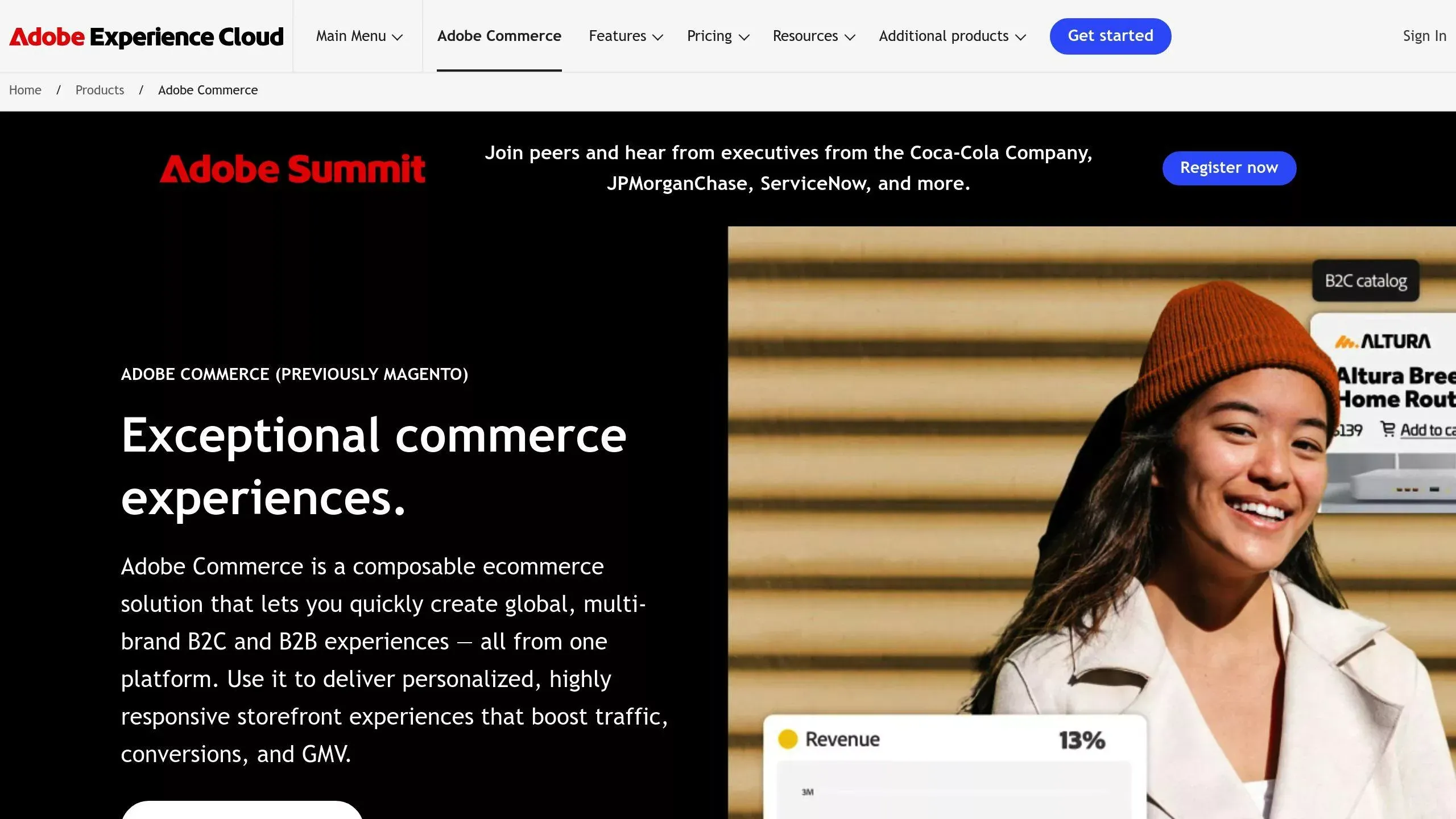
Adobe Commerce, previously known as Magento, is a platform tailored for businesses aiming to manage multiple sales channels effectively. Since Adobe acquired it in 2018, the platform has expanded its capabilities, integrating deeply with Adobe’s suite of tools while preserving its powerful core functionalities.
Platform Capabilities
Adobe Commerce is built to handle complex, multi-channel operations. Its integrated channel management system ensures real-time data synchronization across various touchpoints, helping businesses provide consistent customer experiences both online and offline.
Integration Ecosystem
One of Adobe Commerce’s key strengths is its ability to integrate with Adobe’s other tools, such as Experience Cloud and Creative Cloud. It also connects with third-party systems like CRM and ERP tools, supporting seamless operations across social media, email, and mobile commerce platforms.
Features for Complex Business Operations
The platform is designed to support both B2B and B2C models with features like:
- Advanced inventory management across multiple locations
- Real-time updates for accurate stock tracking
- Customizable workflows to simplify intricate processes
- Tools for managing multiple stores from a single interface
Additionally, Adobe Commerce offers access to a large network of certified developers and specialized enterprise support to ensure smooth operations as businesses expand.
Pricing Structure
Adobe Commerce uses a custom pricing model. Costs vary depending on factors like licensing, hosting, integrations, and the level of support required.
Analytics and Personalization
The platform provides tools for in-depth analytics, customer journey mapping, audience segmentation, and personalized content delivery. These features help businesses make informed decisions and improve customer engagement.
With its strong architecture and integration options, Adobe Commerce helps businesses create consistent, reliable experiences across all channels. However, for those exploring alternatives, platforms like Salesforce Commerce Cloud also bring unique advantages to the table for managing omnichannel growth.
3. Salesforce Commerce Cloud Overview
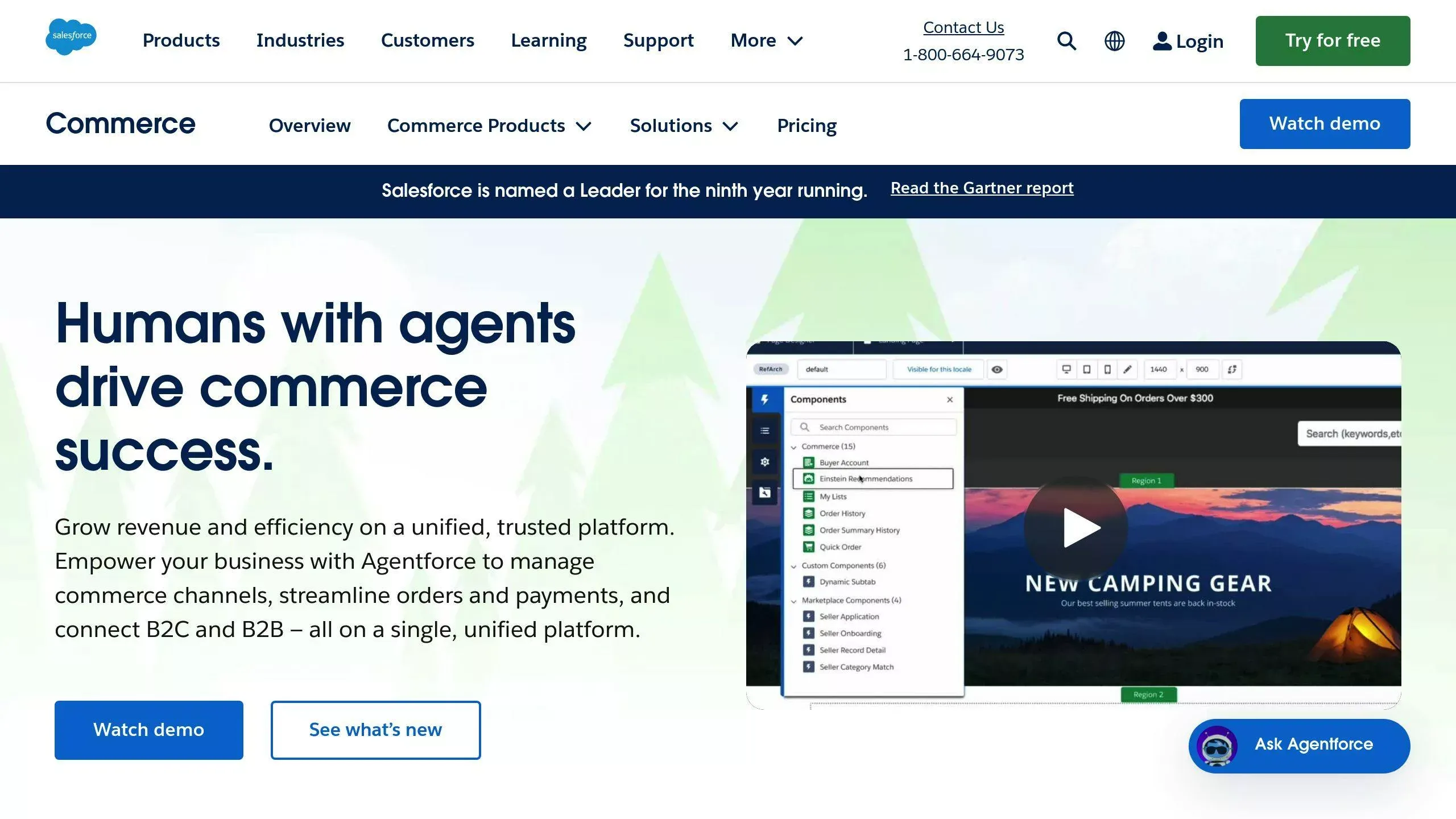
Salesforce Commerce Cloud (SFCC) is a cloud-based platform designed to help businesses create smooth, unified shopping experiences across multiple channels. It’s a popular choice for major brands looking to enhance their omnichannel capabilities.
Platform Capabilities
SFCC’s infrastructure is built to handle heavy traffic efficiently. It also incorporates Einstein AI, which uses data insights to deliver personalized shopping experiences. The platform stands out for its smart merchandising tools and reliable performance during high-demand periods.
Key Features for Omnichannel Success
SFCC offers tools that help businesses deliver consistent customer experiences across all channels, including:
- Real-time synchronization of inventory and orders
- Mobile-friendly storefronts with responsive design
- Support for global commerce, including multiple languages, currencies, and tax systems
- AI-driven personalization powered by Einstein AI
- A unified view of customer interactions across platforms
Integration and Ecosystem
SFCC integrates seamlessly with Salesforce Marketing Cloud and Service Cloud, creating a cohesive omnichannel strategy. It also supports third-party tool integration, allowing businesses to expand their functionality as needed.
Success Stories and Performance Metrics
Several brands have seen impressive results with SFCC:
| Brand | Results |
|---|---|
| Guess | 72% faster website loading, 60% higher conversion rate |
| Puma | 69% faster mobile site load time |
| Rituals Cosmetics | 80% increase in online sales within a year |
Pricing Structure
SFCC uses a pricing model based on Gross Merchandise Value (GMV). This approach allows costs to scale along with business growth, making it an appealing option for medium to large enterprises.
Security and Compliance
The platform prioritizes data security with features like encryption, role-based access controls, and compliance with standards like PCI, HIPAA, and ISO. These measures ensure secure operations across all channels.
While Salesforce Commerce Cloud delivers enterprise-grade omnichannel solutions, platforms like BigCommerce might better suit businesses with different needs or sizes.
4. BigCommerce Overview
BigCommerce is an Open SaaS platform designed to help businesses streamline their online and offline channels. Since its launch in 2009, it has served tens of thousands of merchants in over 150 countries, offering tools to create unified shopping experiences.
Platform Architecture
BigCommerce relies on Cloudflare‘s infrastructure to ensure high performance, with 10ms connection times and 99.98% uptime. The platform meets strict security standards, holding ISO/IEC 27001:2013 and PCI DSS 3.2, Level 1 certifications. It supports up to 600 SKUs per product and provides comprehensive API documentation for developers.
Key Omnichannel Features
BigCommerce stands out by offering tools that simplify managing multiple sales channels:
| Feature Category | Capabilities |
|---|---|
| Channel Integration | Direct connections to platforms like Google, Facebook, Instagram, eBay, Wish, and Mercado Libre |
| Data Management | Centralized control of inventory, pricing, and customer data across channels |
| Content Management | Built-in CMS with a visual page builder and drag-and-drop merchandising tools |
| Analytics | Real-time insights with 11 pre-built report types |
| Mobile Commerce | Responsive design and native mobile features |
Performance Metrics
For example, BB Wheels saw impressive results with BigCommerce, including a 63% boost in conversion rates, 34% revenue growth, and an 8% increase in customer base.
Platform Pricing
BigCommerce plans start at $39/month for small businesses, with custom pricing available for enterprises based on annual sales. The platform includes built-in features that can save merchants between $5,800 and $30,000 annually on app subscriptions compared to Shopify Plus.
Integration Capabilities
Through its partnership with Feedonomics, BigCommerce enables seamless product catalog synchronization across sales channels. This ensures consistent pricing and product details at every customer touchpoint.
BigCommerce offers scalability and cost-effective solutions, though platforms like Shapo may better suit smaller businesses with specific omnichannel needs.
Comparison of Platforms: Pros and Cons
Choosing the right omnichannel platform means matching its features with your business goals and challenges. Here’s a breakdown of how the top platforms stack up.
Enterprise-Level Solutions
Salesforce Commerce Cloud offers strong omnichannel tools and personalized marketing options. However, it demands significant customization and technical expertise. Its merchandising tools and multi-store capabilities make it a great fit for large enterprises.
Adobe Commerce is highly customizable, with pricing starting at $22,000 for on-premise and $40,000 for cloud deployment. Built on an open-source foundation, it offers flexibility but requires more effort for security and maintenance.
For businesses with tighter budgets or simpler needs, mid-market platforms provide a more affordable yet functional alternative.
Mid-Market Solutions
Shopify Plus is known for its ease of use and app marketplace, featuring over 6,000 apps (with 3,000+ available for free) to expand functionality [2]. Starting at $2,300 per month, it’s a solid choice for growing businesses. However, a recent 25% price hike and limited B2B features may deter some users [3].
BigCommerce delivers an average 211% ROI within three years, according to user reports [3]. Its tiered plans begin at $39 per month, with custom pricing available for larger enterprises.
Key Platform Comparison
Platform Strengths Summary
- Shopify Plus: Great for quick setup and built-in POS integration.
- Salesforce Commerce Cloud: Best for advanced merchandising and scalability.
- Adobe Commerce: Perfect for deep customization and strong B2B tools.
- BigCommerce: A cost-efficient option with flexible APIs.
Each platform has its own strengths, catering to different business needs. We’ll dive deeper into these in the recommendations section.
Final Thoughts and Recommendations
Choosing the right omnichannel platform can have a major impact on your business’s growth and how satisfied your customers are. Here’s a breakdown of recommendations tailored to various business needs.
Business Scale Recommendations
Enterprise Level
If you’re running a large enterprise with complex operations and a global footprint, consider these options:
- Salesforce Commerce Cloud: Known for its AI-driven personalization and ability to handle multiple languages and currencies from a single dashboard. Its pricing model, based on 1-3% of GMV, aligns well with large-scale businesses.
- Adobe Commerce: Offers a high level of customization and strong B2B features. Cloud-based deployment starts at $40,000, making it a solid choice for businesses needing advanced solutions.
Mid-Market
For growing businesses that need scalability without overly complex technical demands:
- Shopify Plus: Priced at $2,500 per month, it strikes a balance between features and ease of use. The app marketplace adds flexibility for scaling.
- BigCommerce: Delivers strong returns, with an average 211% ROI reported within three years [3]. Its tiered pricing structure supports growth while offering enterprise-level features.
Industry-Specific Solutions
| Business Type | Recommended Platform | Key Advantage |
|---|---|---|
| Retail Chains | Shopify Plus | Combines in-store and online operations |
| B2B Wholesale | Adobe Commerce | Automates workflows with customization |
| Global Brands | Salesforce Commerce Cloud | Optimizes cross-border commerce |
| Fast-Growing D2C | BigCommerce | Scales quickly to meet demand |
Implementation Success
“Only 25% of consumers are satisfied with current omnichannel experiences, despite 75% desiring seamless interactions,” according to McKinsey.
To succeed with any platform, focus on integrating data, optimizing for mobile, and maintaining consistent branding across all channels. Platforms like Salesforce Commerce Cloud and Adobe Commerce are particularly strong in these areas.
Strategic Considerations
When evaluating platforms, think about both short-term and long-term costs. Match pricing models to your sales trends and growth plans. For example, if your business has seasonal spikes, weigh the benefits of fixed monthly pricing (like Shopify Plus) versus GMV-based models (like Salesforce Commerce Cloud).
FAQs
Here are answers to some common questions about omnichannel platforms to help you make the best choice for your business.
What is the best omnichannel platform?
The right platform depends on your business size, industry, and specific needs. Here’s a quick comparison of top options:
| Business Size | Recommended Platform | Best For |
|---|---|---|
| Growing SMB | BigCommerce | Scaling operations |
| Mid-Market | Shopify Plus | Easy setup and integrations |
| Enterprise | Salesforce/Adobe Commerce | Handling complex global operations |
How do I choose the right omnichannel platform?
When selecting a platform, focus on how well it integrates with your current tools, its ability to grow with your business, and whether it offers key features like real-time syncing, personalization, and analytics. Some important factors include:
- Scalability: Can the platform handle your growth?
- Data Management: Does it provide a unified view of customer data?
- Mobile Optimization: Is it designed with mobile users in mind?
- Analytics: Are the reporting tools robust and insightful?
What ROI can I expect from an omnichannel platform?
The ROI depends on how well the platform is implemented. Factors like effective integrations, mobile-friendly design, and operational improvements play a major role. Businesses often see higher revenue and better customer retention when using these platforms effectively.
How long does implementation typically take?
Implementation time varies based on the platform’s complexity and customization needs. Here’s a general timeline:
| Platform Type | Typical Timeline | Key Factors |
|---|---|---|
| Basic Solutions | 1-2 months | Minimal customization |
| Mid-tier Platforms | 2-4 months | Standard integrations |
| Enterprise Systems | 4-6+ months | Complex customizations |
What security measures should I consider?
Security is critical. Leading platforms provide features like:
- Encrypted data transmission
- Compliance with data protection laws
- Regular security audits
- Secure management of customer information
Make sure the platform you choose meets your industry’s specific security and data protection standards.