How to Calculate Conversion Rates: Unlock the Secret to Persuasive E-commerce Success


In this article
- What Is Conversion Rate and Why Does It Matter?
- How to Calculate Conversion Rate
- Common Mistakes to Avoid When Measuring Conversion Rates
- How to Interpret Your Conversion Rates
- Actionable Steps to Improve Conversion Rates
- Tools to Simplify Conversion Rate Analysis
- Explaining Conversion Rates to Your Team
- Conclusion
Your conversion rate is the silent verdict of your audience, revealing how persuasive your business truly is. Whether you run an online store or manage a digital marketing team, understanding conversion rates is crucial to improving your bottom line. But calculating conversion rates and interpreting this essential metric can feel daunting—especially if you’re struggling to understand online consumer behavior or simplify complex marketing concepts.
This guide will demystify conversion rates, showing you step-by-step how to calculate them, avoid common mistakes, and use the insights to boost sales. Let’s dive in.
What Is Conversion Rate and Why Does It Matter?
Definition of Conversion Rate
A conversion rate is the percentage of website visitors who complete a desired action. These actions, called conversions, vary by business type and goals, but common examples include:
- Purchases: Completing an online order.
- Sign-ups: Registering for a newsletter or creating an account.
- Form Submissions: Filling out a contact form or survey.
- Downloads: Accessing a free eBook or other resource.
Why Conversion Rates Are Critical
Your conversion rate measures the effectiveness of your website, marketing campaigns, and overall customer experience. It answers key questions like:
- Are your visitors finding what they need?
- Is your site persuasive and user-friendly?
- Are you providing enough trust signals?
Think of your website as a storefront. While traffic measures how many people walk by, the conversion rate shows how many walk in and make a purchase. Without conversions, traffic is meaningless.
How to Calculate Conversion Rate
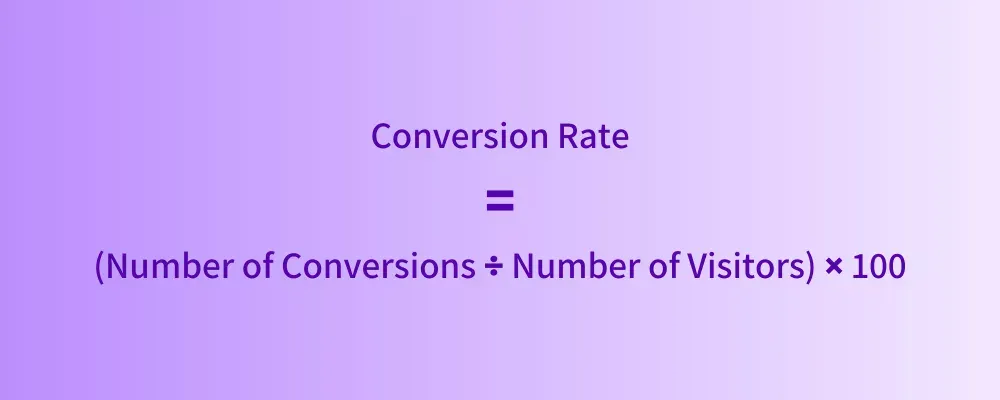
The formula for calculating conversion rates is straightforward:
Conversion Rate = (Number of Conversions ÷ Number of Visitors) × 100
Step-by-Step Example
- Define Your Conversion Goal: Let’s say you want to measure the percentage of visitors making a purchase.
- Gather Data:
- Total website visitors in a month: 10,000.
- Total purchases in the same period: 500.
- Apply the Formula:
- Conversion Rate = (500 ÷ 10,000) × 100 = 5%.
This means 5% of your website visitors convert into customers.
Pro Tips for Accurate Calculations
- Use Analytics Tools: Platforms like Google Analytics and Shopify provide conversion rate data automatically.
- Segment Your Traffic: Break down conversion rates by device, source, or campaign for deeper insights.
- Avoid Inflated Metrics: If a user visits multiple times, count unique visitors to avoid skewed results.
Common Mistakes to Avoid When Measuring Conversion Rates
Even seasoned marketers can miscalculate or misinterpret conversion rates. Here are the most frequent errors to watch for:
1. Failing to Define a Clear Goal
A conversion must be tied to a specific action. Vague goals like “engagement” make your data meaningless.
2. Overemphasizing Traffic
High traffic doesn’t always mean high sales. Focus on how well visitors convert, not just how many arrive.
3. Ignoring Segmentation
Conversion rates can differ widely between mobile and desktop users or first-time vs. returning visitors. Segment your data for accuracy.
4. Not Accounting for Context
Seasonal spikes, promotions, or external factors (e.g., economic downturns) can influence your metrics. Adjust your expectations accordingly.

How to Interpret Your Conversion Rates
Once you have your conversion rate, the next step is understanding what it means. Here’s a framework to guide you:
What Is a Good Conversion Rate?
Industry Benchmarks:
- E-commerce: 1%–3% on average.
- Niche industries (e.g., luxury goods): Higher due to selective targeting.
Context Matters: Compare your rates to similar businesses, not generic averages.
High Conversion Rates
What They Mean:
- Your messaging, design, or offer is resonating.
- Visitors trust your brand enough to take action.
Red Flags:
- A high conversion rate with low traffic may indicate a narrow audience. Scale traffic to test sustainability.
Low Conversion Rates
What They Mean:
- Potential friction points in your funnel.
- Your audience may not be finding what they need.
What to Investigate:
- Is your offer clear and compelling?
- Are there UX issues like slow load times or confusing navigation?
Actionable Steps to Improve Conversion Rates
A low conversion rate isn’t the end—it’s a starting point for improvement. Use these strategies to turn things around:
1. Understand Your Audience
- Use tools like heatmaps (e.g., Hotjar) to see where users click and scroll.
- Conduct surveys to understand pain points and desires.
- Analyze behavioral data to identify trends and common drop-off points.
2. Optimize Your Conversion Funnel
- Simplify Checkout Processes:
- Reduce form fields.
- Offer guest checkout options.
- Enhance Navigation:
- Use clear, descriptive menus.
- Add a prominent search bar.
- Eliminate Distractions:
- Remove unnecessary pop-ups or competing CTAs.
3. Leverage A/B Testing
- Test one change at a time:
- Headline variations.
- Button colors and placement.
- Product image styles.
- Use tools like Optimizely or Google Optimize to track results.
4. Increase Trust and Credibility
- Showcase social proof:
- Testimonials
- Recent Sales Pop ups
- Video reviews
- Trust badges (e.g., secure payment icons)
- Add guarantees or return policies prominently.

5. Focus on Mobile Optimization
- Check load speed with tools like Google PageSpeed Insights.
- Use responsive designs to ensure your site looks great on any device.
6. Enhance Content Quality
- Rewrite product descriptions to highlight benefits over features.
- Use storytelling to connect emotionally with your audience.
Tools to Simplify Conversion Rate Analysis
Analyzing and improving conversion rates doesn’t have to be overwhelming. Here are some top tools to help:
- Google Analytics: Track traffic, goals, and conversion rates across multiple channels.
- Hotjar: Visualize user behavior with heatmaps and session recordings.
- Shopify Analytics: For e-commerce owners, this tool provides real-time insights into sales and conversions.
- Optimizely: Perfect for running A/B tests on your website.
- Crazy Egg: Offers detailed click maps and UX insights.

Explaining Conversion Rates to Your Team
For digital marketing managers, explaining conversion rates to your team is key to driving collective action. Here’s how to simplify the concept:
1. Use Relatable Analogies
Compare conversion rates to a batting average in baseball: “It’s not how many pitches you see but how many hits you get.”
2. Visualize the Data
Create dashboards that show:
- Traffic vs. conversions.
- Funnel drop-off points.
- A/B test results.
3. Focus on Collaboration
- Host brainstorming sessions to uncover potential roadblocks.
- Encourage team members to contribute improvement ideas, from developers to copywriters.
Conclusion
Your conversion rate is more than a number—it’s the pulse of your online business, a direct measure of how persuasive and effective your website is. By calculating it accurately, avoiding common mistakes, and leveraging actionable insights, you can unlock the full potential of your e-commerce store.
Key Takeaways
- Understand and calculate conversion rates with the simple formula: (Conversions ÷ Visitors) × 100.
- Avoid pitfalls like undefined goals or ignoring segmentation.
- Use tools like Google Analytics and Hotjar to streamline data collection and analysis.
- Prioritize audience understanding, funnel optimization, and trust-building to improve your rates.
Next Steps
Ready to take action? Start by calculating your current conversion rate and identifying one area for improvement this week. The journey to higher sales and better persuasion begins today.
Once you’ve calculated your conversion rates, explore our comprehensive guide on E-commerce Conversion Rate Optimization to learn actionable strategies for improving them. If you are a Shopify store owner, see our Shopify Conversion Handbook 2025 for the ultimate guide to improve conversions for your Shopify store.